
Knee Pain While Climbing Stairs: What Could Be Causing It?
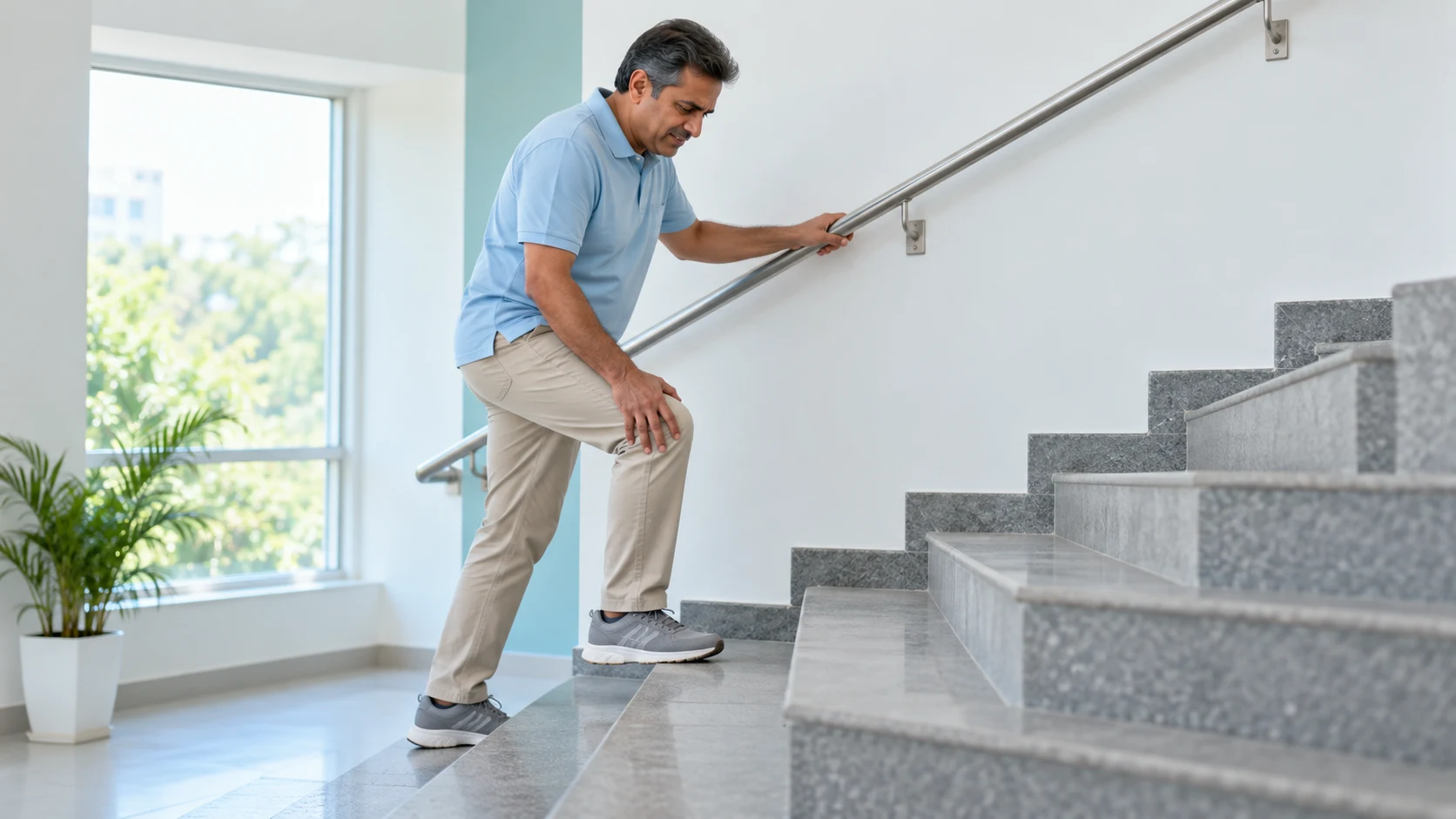
Does your knee ache when you climb to the next floor, even though walking on level ground feels manageable? Stairs bend and load the knee more than ordinary walking, which can make an underlying problem more noticeable.
Pain on stairs can have several causes, from irritation around the kneecap to arthritis or an injury. The location of pain, when it started and whether the knee swells or catches all help guide assessment. If discomfort keeps returning, knee pain treatment in Karnal should begin with identifying the cause rather than repeatedly masking the symptoms.
Why Do Stairs Make Knee Pain More Noticeable?
As you step upward, the thigh muscles work to lift your body while the knee bends and straightens. The kneecap and surrounding tissues help manage that movement. Going downstairs also requires controlled bending, which some people find uncomfortable.
A sudden increase in stair use, exercise or squatting may aggravate sensitive tissues. Muscle weakness or changes in how the kneecap moves can contribute too. Pain during this activity alone cannot confirm a diagnosis.
Common Causes of Knee Pain on Stairs
Pain Around the Kneecap
Patellofemoral pain describes discomfort at the front of the knee or around the kneecap. It can affect people who play sports and those who do not. Stairs, squatting or sitting with bent knees for a long time may bring it on. Changes in training load and the strength or coordination of hip and thigh muscles can be relevant.
Knee Osteoarthritis
Osteoarthritis involves changes in the joint, including damage to its cushioning cartilage. It may cause activity-related pain, stiffness after rest and swelling. Some people first notice difficulty with steps or getting up from a chair. However, stair pain does not automatically mean arthritis, and the severity of symptoms varies.
Tendon Irritation and Overuse
The tendons around the knee can become painful with repetitive loading, especially after changes in running, jumping or other activity. Discomfort may be more localised near the kneecap. Reducing an aggravating activity temporarily and following a tailored rehabilitation plan may help, depending on the diagnosis.
An Injury Inside the Knee
A twist, fall or sports injury may affect a meniscus, ligament or another structure. Pain accompanied by swelling, catching, locking or instability deserves assessment. Tell your doctor about the original injury, even if you were able to walk afterwards.
When Should You See an Orthopaedic Doctor?
Consider an appointment if pain keeps returning, does not improve, or interferes with stairs, sleep or everyday movement. An orthopaedic doctor in Karnal can examine the joint and distinguish between problems that need different approaches.
Seek urgent medical care if you cannot bear weight, the knee looks deformed, severe swelling develops, or the joint becomes hot and red with fever. A knee that locks or repeatedly gives way also needs prompt assessment. These symptoms should not be managed only with home remedies.
How Is the Cause Diagnosed?
Your doctor will ask where the pain is, whether going up or down is worse, and whether symptoms followed an injury or activity change. Examination may include movement, tenderness, swelling, stability and walking pattern.
An X-ray may help assess arthritis or a bone problem. MRI is reserved for situations where the history and examination suggest a soft-tissue injury or another question that needs clarification. Not everyone with stair-related pain needs a scan. At an orthopaedic hospital in Karnal, assessment should guide the next step.
What Can Help While You Arrange an Assessment?
Temporarily reduce activities that clearly worsen the pain. Use the handrail, take steps slowly and avoid carrying heavy loads on stairs when the knee feels unstable. Gentle movement within comfort is usually preferable to forcing painful squats or repeatedly testing the joint.
A cold pack wrapped in a towel may help with swelling or soreness; avoid applying ice directly to skin. Ask a clinician or pharmacist before using pain medicines, particularly if you have kidney disease, stomach ulcers, heart disease or take other medication.
Treatment and the Role of Joint Replacement
Treatment depends on the cause. It may involve activity adjustments, physiotherapy, strengthening, weight management where appropriate, and medication. People seeking arthritis treatment in Karnal should discuss how symptoms affect their daily life and which options suit their health.
Knee replacement is not the first response to pain on stairs. It may be considered for substantial joint damage when symptoms continue to limit life despite suitable nonsurgical care. A discussion about joint replacement in Karnal should cover expected benefits, risks, rehabilitation and alternatives.
Discuss Persistent Knee Pain at Virk Hospital
If stairs are becoming a daily challenge, consult the orthopaedic team at Virk Hospital, Karnal. Bring any previous reports and note which movements trigger pain. A clear assessment can help you understand the problem and choose an appropriate care plan.
Frequently Asked Questions
Does knee pain on stairs always mean arthritis?
No. Kneecap-related pain, tendon irritation and injuries can also cause it. Symptoms and examination help distinguish the cause.
Should I stop all exercise?
Avoid activities that worsen pain and ask about suitable alternatives. Your doctor or physiotherapist can recommend movements appropriate to your condition.
Will I need knee replacement?
Many knee problems are managed without replacement surgery. The decision depends on joint damage, functional limitations and response to other treatment.